Reflections on Treating our 300,000th Patient
December 17, 2015 - David Citrin
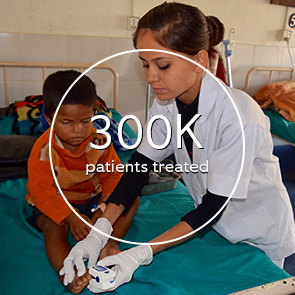
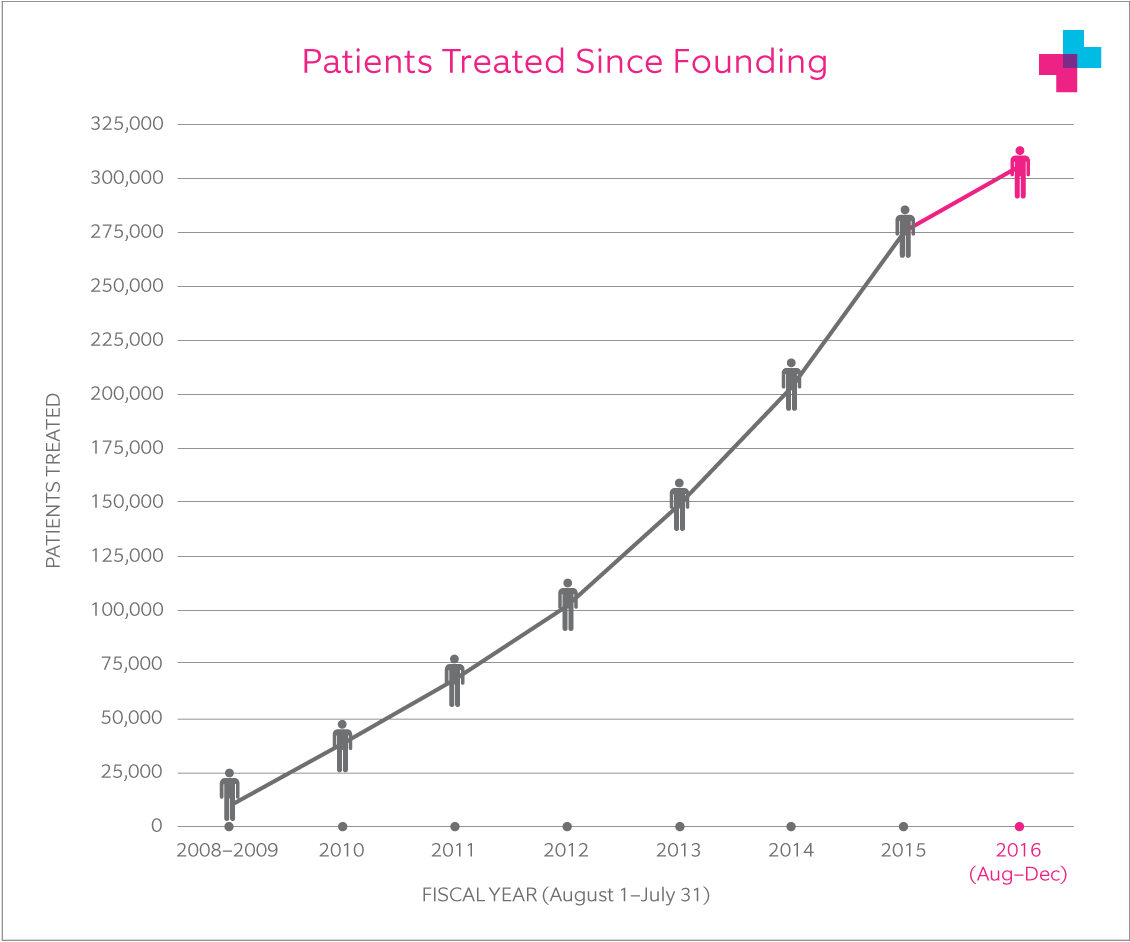
We recently treated our 300,000th patient at our hospital hub since opening its doors in 2009 with Nepal’s Ministry of Health and Population. This milestone is an essential indicator of direct service delivery in one of Nepal’s most underserved settings, and also serves as a qualitative measure of the acceptability of these services.
Put another way, people find our facility a trusted place to seek healthcare for themselves and their loved ones.
Further, this number is a testament to the remarkable work being done in rural Nepal by our 300+ teammates who day in and day out deliver, support, and coordinate high-quality and free healthcare, as enshrined in Nepal’s constitution: “Every citizen shall have the right to basic health services free of cost, and no one shall be deprived of emergency health services.”
Possible’s work is fueled by this recognition that access to healthcare is a human right, and we take an iterative and adaptive approach to healthcare systems design that puts patients at the center. This means we aim to meet people where they are in terms of their own needs and aspirations for care—whether through building a responsive community health worker program that brings follow-up, counseling, and care coordination closer to home; convening Possible’s Community Advisory Board for guidance on the acceptability of our public health interventions in the communities where we work; or further training our team of patient navigators who ensure patients have a dignified healthcare experience at our hospital.
The implementation of our electronic health record (EHR) system has also improved data quality for the growing number of patient visits we’ve seen—enabling our medical team to access previous patient records, lab results, and digital x-rays instantly. This will be even more critical as we expand our hub into a 50-bed teaching hospital.
We still have a long way to go. As we celebrate the 300K patients-treated milestone, we are acutely aware of how many people we have yet to reach. In the coming months and years, we seek to expand our model to ensure we can accomplish this; an elderly man who has COPD is provided his medication at home by a Community Health Worker, a pregnant woman identified by a community health nurse as being breech and delivers safely at our hospital via cesarean-section, or the young boy who broke his arm climbing a tree to store fodder for the winter, and is treated by our orthopedic surgeon.
Still, there remain hundreds of thousands of people without access to healthcare as a direct result of the devastating 2015 earthquakes and aftershocks. Possible is currently working with our government partners to rebuild 21 health posts in Dolakha District, where an estimated 87% of healthcare facilities were damaged and 40% of the district population are without access to basic healthcare.
The road to building back differently in Nepal is thus a long one. We are committed to making this road by walking, while remaining true to our #1 rule: solve for the patient.
–David Citrin, Director of Impact